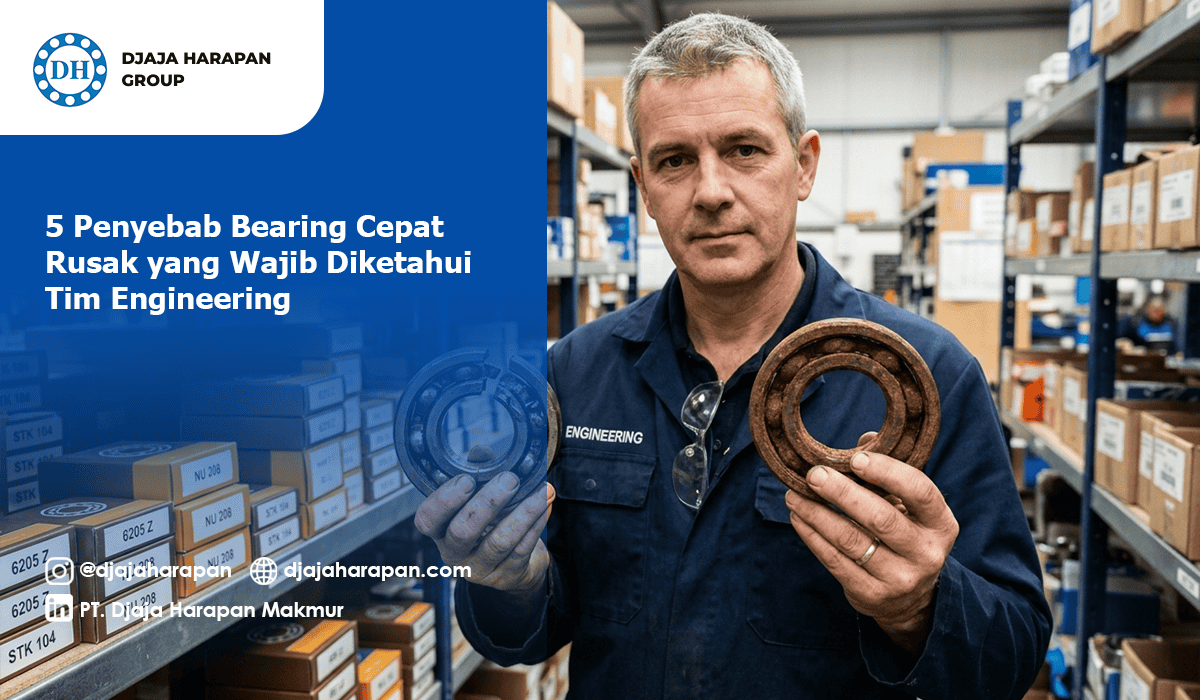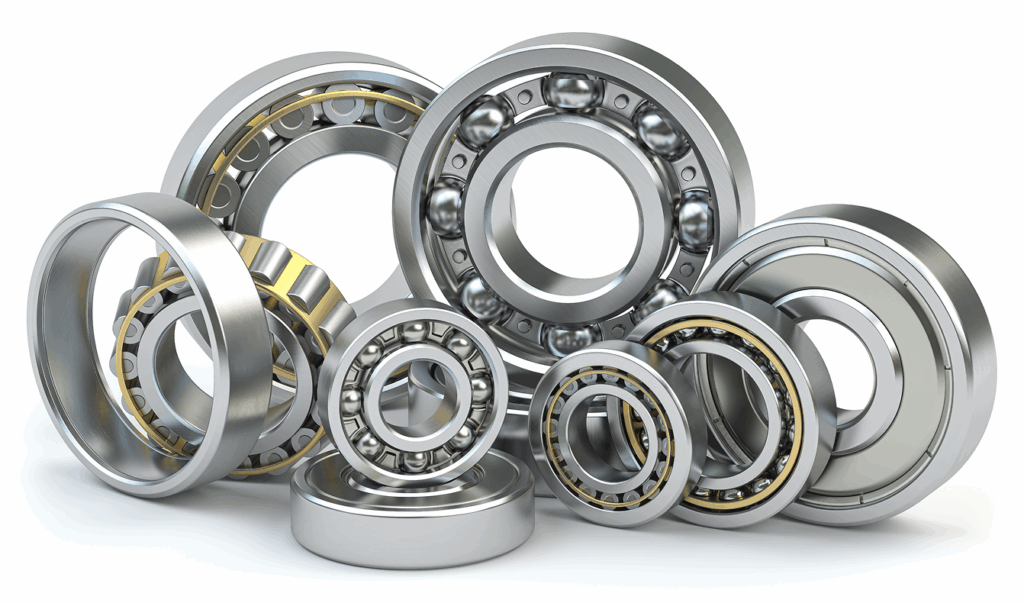
Bearings are a crucial component in various industrial machines. Their crucial function in reducing friction and maintaining stable movement requires bearings to be kept in optimal condition. However, in practice, many bearings fail prematurely.
This problem isn’t always caused by product quality, but often stems from errors in use, installation, and storage. Therefore, it’s crucial for engineering and maintenance teams to understand the root causes of bearing failure to avoid unnecessary downtime and repair costs.
Here are 5 main causes of bearings breaking down quickly that you should know.
1. Improper Use of Lubricants
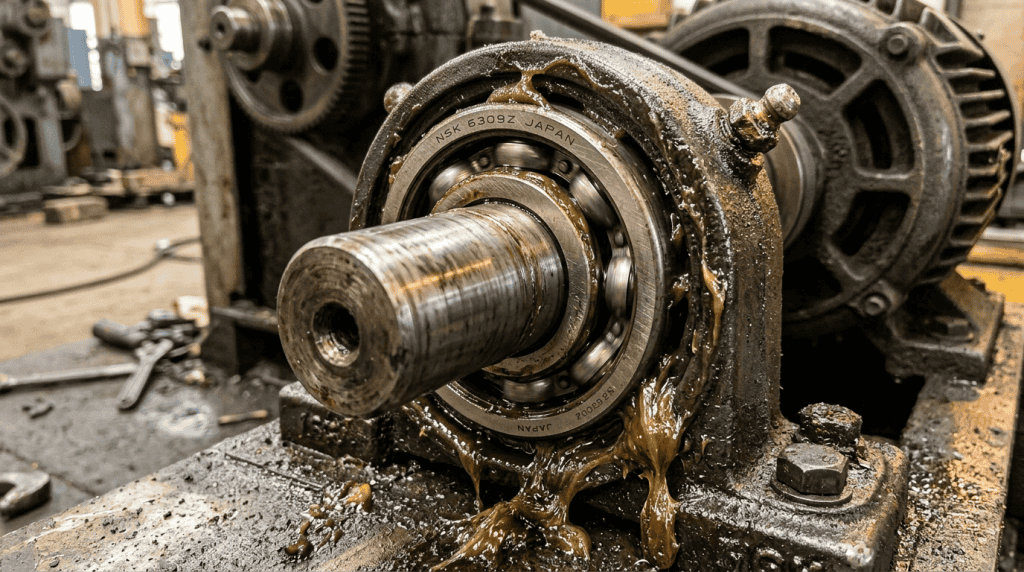
Improper lubrication is one of the most common causes of bearing failure. This can include using the wrong type of lubricant, using too much or too little lubricant, or using an incorrect application method.
Lubricants reduce friction and heat generated during bearing operation. Insufficient lubrication increases friction and causes accelerated wear. Conversely, excessive lubrication can increase temperature and pressure within the bearing. Therefore, ensure that lubricants are always used according to recommended technical specifications.
2. Contamination from Dust, Water, and Foreign Particles
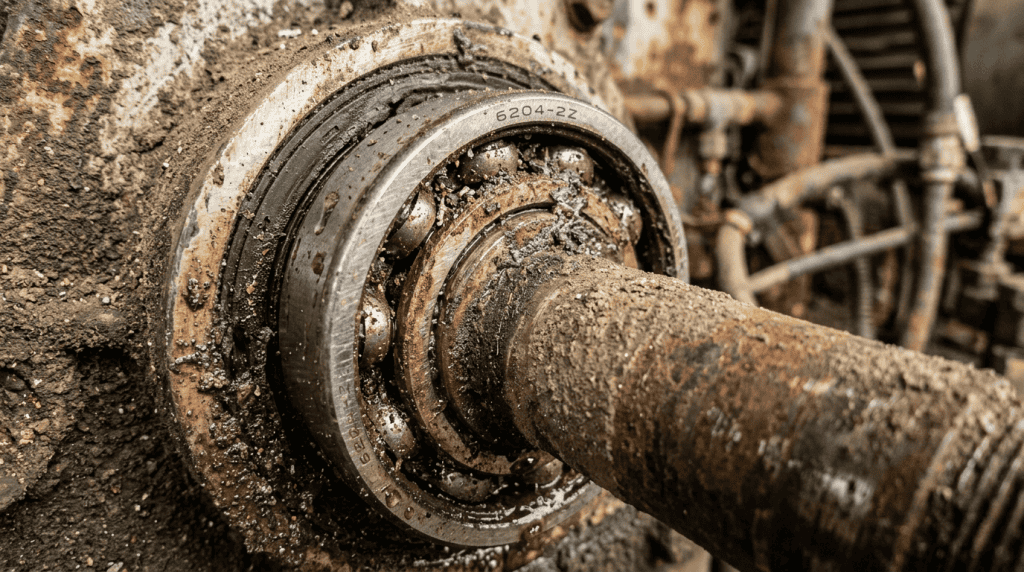
Contamination is a major factor that is often overlooked, but has a significant impact on bearing life. Dust, dirt, metal shavings, and water that enter the bearing can slowly damage the component’s surface.
In addition to causing wear, contamination can also trigger corrosion, accelerating damage. To prevent this, using good seals and maintaining a clean work environment are crucial steps that should not be overlooked.
3. Error in Installation Process
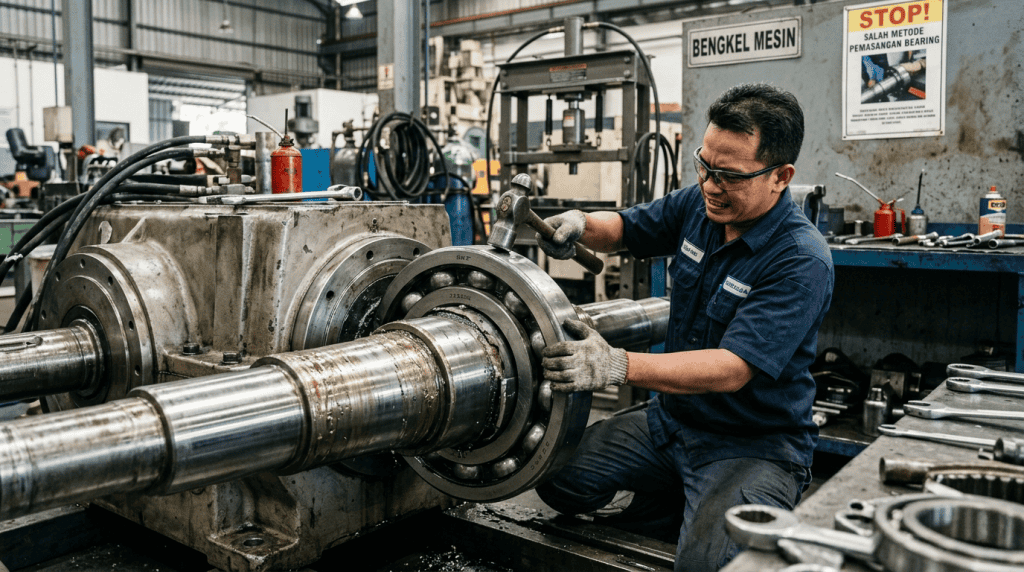
Improper bearing installation can cause damage even before the bearing reaches its optimal use. Common errors include hammering, using inappropriate tools, or misalignment.
Proper installation requires the use of specialized tools and adherence to applicable technical standards. Proper installation maximizes bearing performance and prolongs its service life.
4. Workload that Exceeds Capacity (Overload)
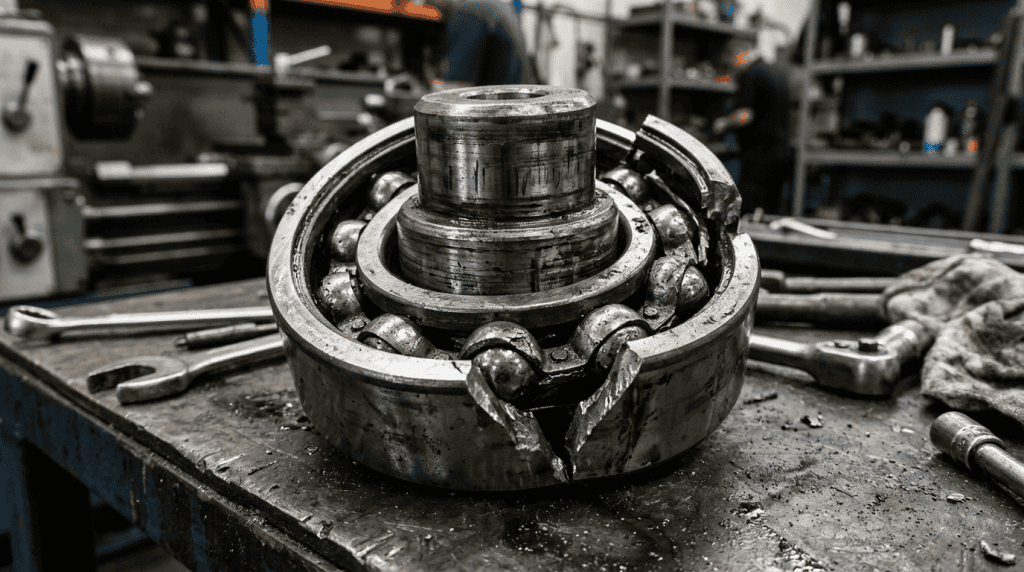
Each bearing is designed to withstand a specific load according to its specifications. Using a bearing beyond its recommended capacity can cause excessive stress, leading to rapid wear, deformation, and even fatal damage such as cracks or fractures.
Bearing selection must be tailored to the application requirements, including workload, speed, and operating conditions. Using the right bearing will help maintain stable and efficient machine performance.
5. Improper Storage
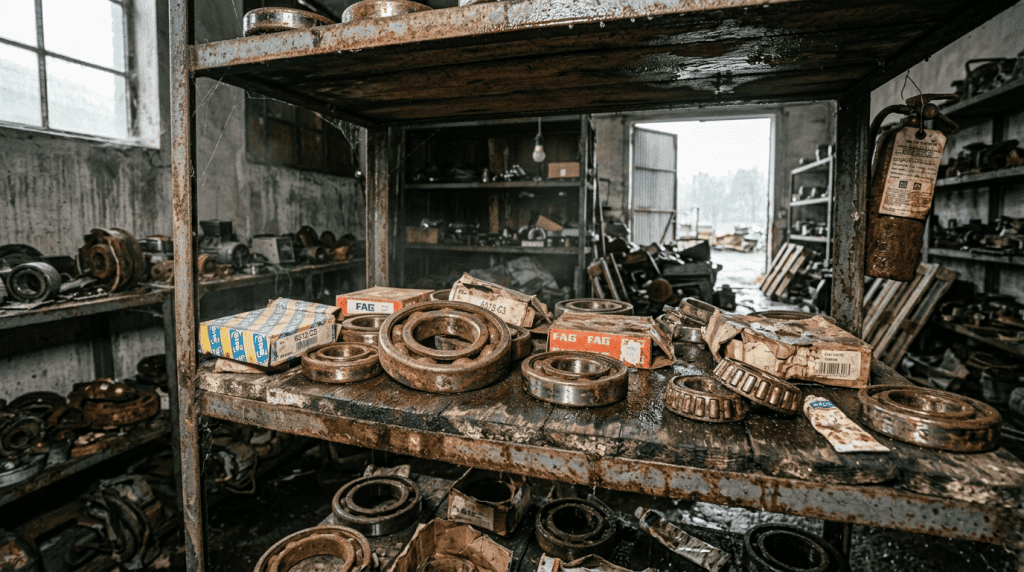
Many people don’t realize that the way you store your bearings also affects their quality. Bearings stored in damp, open areas, or exposed to dust are at risk of corrosion and contamination before use. These conditions can significantly reduce the bearing’s lifespan. Therefore, store bearings in a dry, clean location and keep them in their closed packaging until use.
Premature bearing failure is often caused by preventable factors. Lubrication, contamination, installation, workload, and storage all play a significant role in determining bearing lifespan.
Djaja Harapan Group provides a wide range of original bearings for industrial needs, from ball bearings and roller bearings to custom products tailored to your specific application. Consult your needs with our team today to find the best solution and the right product.
By understanding and avoiding these mistakes, companies can improve operational efficiency, reduce downtime, and lower machine maintenance costs.